
Table of Contents
- Why Readers Are Seeking Australian Crime Fiction Alternatives
- The Best Independent Australian Crime Novels to Read in 2026
- Thriller Books Set in the Australian Bush: Rural Noir and Outback Suspense
- Urban Crime and Metropolitan Mysteries: City-Based Australian Crime Fiction
- Psychological Suspense and Police Procedurals by Australian Authors
- Award-Winning Australian Crime Novels and Emerging Voices
- How to Find New Australian Crime Authors: A Practical Guide
- Indigenous Perspectives and International Comparisons in Australian Crime Fiction
- Frequently Asked Questions
Why Readers Are Seeking Australian Crime Fiction Alternatives
Australian crime fiction is having a moment, and readers who have worked through the big-name bestsellers want something with more edge. This guide maps the best independent Australian crime novels, from rural noir to urban procedurals.
The Best Independent Australian Crime Novels to Read in 2026
The best independent Australian crime novels come from smaller presses and mid-list authors who take risks the mainstream avoids.
Moy Conspiracy by Arnold Van Der Vegt
A gripping adult crime novel blending international intrigue with high-stakes suspense. Global mystery elements weave through a fast-paced plot, and the character work is built for adult readers who want tension that holds from first page to last. Shaped by real-world travel and observation, its settings carry a texture research alone rarely produces.
Unbury the Dead by Fiona Hardy
A fresh, lively crime novel following best mates Teddy and Alice through a distinctive mystery. The friendship dynamics carry the story and the atmospheric local setting does real work. Lighter than a traditional police procedural, exactly the point. Best for readers who want character over body count.
Redbelly Crossing by Candice Fox
A hard-hitting procedural featuring police protagonists Russell and Evan in a high-stakes environment. Fox writes gritty, realistic investigation scenes and intense character-driven conflict. Best for fans of realistic police work.
The Graduate by Rebecca Lim
A twisty, dark thriller: multi-layered plot, contemporary themes, relentless pacing. Best for psychological thriller fans.
Liar’s Game by Jack Beaumont
A high-stakes thriller. The deception-driven plot is intricate and expertly constructed, though it demands close attention. Best for espionage-adjacent suspense fans.
The Cartographer by Peter Twohig
A tautly written novel offering a genuine alternative to mainstream procedurals. Atmospheric world-building and focused pacing make it a slower burn than an action thriller, and better for it. Best for readers who want a cerebral crime experience.
Lyrebird by Jane Caro
A suspenseful, character-driven novel. Literary prose, thought-provoking themes, deep character exploration. Best for readers who prefer literary crime over action.
| Title | Sub-genre | Best For | Intensity |
|---|---|---|---|
| Moy Conspiracy | International crime | Fast-paced adult readers | High |
| Unbury the Dead | Character-driven mystery | Friendship-focused readers | Medium |
| Redbelly Crossing | Police procedural | Realistic crime fans | High |
| The Graduate | Psychological thriller | Dark twist seekers | High |
| Liar’s Game | Deception thriller | Espionage fans | High |
| The Cartographer | Atmospheric crime | Cerebral readers | Medium |
| Lyrebird | Literary crime | Character-first readers | Medium |
If you’re in a book club, pair a high-intensity title with a medium one. A group that reads Redbelly Crossing and Lyrebird back to back will have far more to argue about than one that reads two procedurals in a row.
Thriller Books Set in the Australian Bush: Rural Noir and Outback Suspense
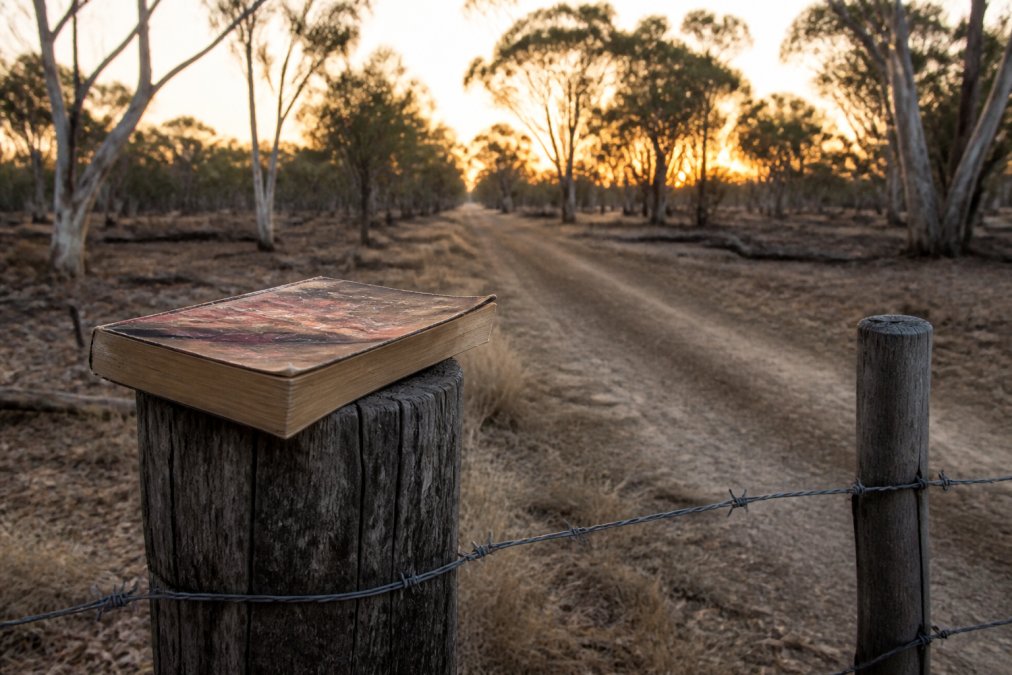
Thriller books set in the Australian bush work because the landscape itself becomes a character, and rural noir is where that pressure is felt most. Isolation, distance, and a setting that doesn’t care whether you survive create tension no city street can match.
What Actually Makes a Rural Noir
Rural noir is not simply a crime novel with a farm on the cover. Four mechanics separate the real thing from a city procedural in a flannelette shirt:
- Distance as a plot device. A witness three hours from the nearest station changes how a case unfolds. A suspect who can disappear into state forest changes whether they are ever found.
- Closed-community pressure. In a town of 400, everyone knows the victim, the suspect, and the officer. Silence is a social survival strategy, not a plot convenience.
- Land as evidence. Drought, fire, flood and distance leave marks on a case. A body found after a fire is a different investigation from one found after rain.
- Institutional absence. When the nearest detective is a four-hour drive away, the protagonist often has to act before backup arrives.
Landscape as a Driving Force in Crime Narratives
When landscape drives a crime narrative, distance becomes a plot device. A town where everyone knows everyone changes who will talk. Readers who want to understand this tradition properly can look to the National Library of Australia’s collection guides on Australian literature, which trace how the bush has shaped the country’s storytelling for over a century.
Rural Noir by Mood: Slow-Burn, Fast-Paced and Dark/Gritty
Most ‘best of’ lists sort rural crime by author. Sorting by mood is more useful when you want an alternative to a mainstream hit:
- Slow-burn rural noir rewards patience. The crime surfaces late, and the first half is atmosphere, character and place. Best for readers who liked the pacing of literary crime but want a body in the story.
- Fast-paced outback suspense front-loads the inciting incident and keeps the investigation moving. Best for readers coming off a thriller binge who don’t want to wait 150 pages for the hook.
- Dark/gritty rural crime deals in violence, corruption and moral compromise. Emotionally heavy, and not the right entry point if you read to unwind.
If You Like Nordic Noir, Try This
International readers often arrive at rural noir through Nordic crime. Both use isolation, climate and small-community secrecy to generate dread; the difference is scale. Nordic noir leans on institutional failure, Australian rural noir on geographic distance and the knowledge that help is hours away.
Audiobook Accessibility
Rural noir translates unusually well to audio because so much of the tension is atmospheric rather than visual, and a skilled narrator can carry the long stretches of landscape and silence some print readers skim. Audio is a low-risk way to test whether slow-burn pacing holds your attention.
Urban Crime and Metropolitan Mysteries: City-Based Australian Crime Fiction
City-based crime fiction runs on density: more people, more motives, more places to hide. Urban crime trades the isolation of the bush for the pressure of proximity, where a killer can live two floors up and a detective can pass them on the stairs.
Psychological Suspense and Police Procedurals by Australian Authors
The split between psychological suspense and police procedurals comes down to where the tension lives. Procedurals put it in the investigation, following evidence and procedure toward an answer. Psychological suspense puts it inside a character, where the answer is often the thing they least want to find.
Police Procedurals: The Investigation Is the Story
A procedural earns its name by showing the work: evidence accumulates, suspects get eliminated, and procedure constrains what the detective can and cannot do. The pleasure is competence under pressure, not shock. Redbelly Crossing and The Fallback sit on the procedural side, grounded in realistic investigative detail, and both reward readers who like to follow a case rather than a feeling.
Psychological Suspense: The Character Is the Crime Scene
The Graduate and Lyrebird lean psychological, using character and theme to build dread. The threat is usually someone the protagonist already knows, and the mystery is often about memory, motive or self-deception rather than a stranger in the dark. The trade-off: the ‘whodunit’ can matter less than the ‘why’, which frustrates readers who want a clean puzzle.
Mood-Based Categorization: A Faster Way to Choose
Most lists sort these books by author or award. Sorting by mood is more useful when you are replacing a mainstream hit:
- Slow-burn psychological suspense, character-first, low body count, dread built over chapters. Best for readers who liked literary crime but want tension.
- Fast-paced procedural, evidence-driven, multiple suspects, regular reveals. Best for readers who want momentum.
- Dark/gritty procedural, corruption, compromised officers, moral grey zones. Best for readers who want realism over comfort.
If You Like International Procedurals, Try This
Readers who follow British or American procedural series often find Australian procedurals slower and more place-bound, that is the point. Where international procedurals lean on institutional scale, Australian ones lean on distance, small teams and local knowledge. For the same investigative satisfaction with a different geography, start with a procedural set outside a capital city.
Audiobook Accessibility
Procedurals and psychological suspense both work in audio, but for different reasons: procedurals suit commutes because the plot advances in clear beats, while psychological suspense suits longer sessions because the tension is cumulative. Audio is a low-commitment way to find out which one holds your attention.
Don’t judge a procedural by its first fifty pages. These books front-load setup and procedure, and readers who expect a twist by page thirty often quit just before the plot locks in. Give a procedural a full chapter past the setup before deciding.
Award-Winning Australian Crime Novels and Emerging Voices
Award shortlists are the fastest way to find emerging voices before they become household names. Shortlists reward craft, not just sales, which is why they surface books a bestseller chart won’t.
How to Find New Australian Crime Authors: A Practical Guide
Finding new Australian crime authors is a repeatable process, not a lucky browse. Here’s a workflow you can run in an afternoon:
- Start with an award shortlist from the last two years, not the winners list
- Pick two titles that match your preferred sub-genre
- Check your local library’s catalogue before buying, since most stock shortlisted crime
- Read the first chapter as a sample, either in-store or via an ebook preview
- Note the publisher, then browse that publisher’s other crime titles
- Join a genre-specific reading community and ask for one recommendation, not ten
- Track what you finish and what you abandon, so your next search is sharper
The single most efficient habit is reading shortlists, not bestseller charts. Shortlists surface craft; charts surface marketing spend. Two years of shortlists will teach you more about a genre than a decade of browsing.
Indigenous Perspectives and International Comparisons in Australian Crime Fiction
Indigenous perspectives are reshaping crime writing in ways that international audiences are only beginning to notice. First Nations authors and characters bring a different relationship to land, community, and justice, and that changes how a crime story is told. Where a conventional procedural treats the setting as a backdrop, these narratives treat country as something with its own claims and its own knowledge.
Frequently Asked Questions
What are some lesser-known Australian crime fiction authors?
Beyond the household names, several independent and emerging authors are producing standout work. Fiona Hardy’s Unbury the Dead offers a fresh voice with strong friendship dynamics. Peter Twohig’s The Cartographer delivers atmospheric, cerebral crime. Jack Beaumont’s Liar’s Game was shortlisted for the 2026 Best Crime Fiction award, and Arnold Van Der Vegt’s Moy Conspiracy brings a travel-informed perspective to adult crime fiction. These writers often publish through smaller presses or directly, so checking local bookshop shelves and author websites is the best way to find them.
How does independent Australian crime fiction differ from mainstream hits?
Independent Australian crime fiction tends to take more narrative risks. While mainstream hits often follow proven formulas, independent authors explore unconventional structures, niche settings, and character-driven plots that may not fit neatly into commercial categories. For example, The Cartographer uses a unique premise and taut pacing rather than a standard police procedural arc. Independent publishing also allows authors to write for specific audiences, such as young teens, without pressure to appeal to the widest possible market.
Where can I find reviews of emerging Australian mystery writers?
Several Australian sources regularly review emerging crime writers. The Australian Crime Writers Association website lists award shortlists and new releases. Independent bookshops often post staff reviews online. Goodreads and StoryGraph have active Australian crime fiction groups where readers discuss debut and independent authors. For a curated starting point, award shortlists include titles like Lyrebird by Jane Caro and Liar’s Game by Jack Beaumont, both of which have generated significant reader discussion.
Are there Australian crime novels that focus on the outback?
Yes, rural noir and outback thrillers are a distinct strength of Australian crime writing. These books use the landscape as more than a backdrop; the isolation, heat, and vast distances often drive the plot. Arnold Van Der Vegt’s Moy Conspiracy incorporates remote and adventurous settings shaped by real-world travel. Redbelly Crossing by Candice Fox places police protagonists in a high-stakes environment where the terrain itself becomes a source of tension. Readers looking for atmospheric, landscape-driven crime will find plenty to explore.
What makes Australian crime fiction unique compared to international thrillers?
Australian crime fiction often foregrounds landscape, cultural context, and a sense of isolation that differs from urban-centric international thrillers. Rural noir and outback settings create a distinctive atmospheric tension. The genre also engages more directly with Indigenous perspectives and historical injustices than many international counterparts. Additionally, Australian authors frequently blend literary prose with genre plotting, as seen in Lyrebird by Jane Caro. This combination of setting, cultural depth, and narrative voice gives Australian crime fiction its own identity.