
Table of Contents
- Why Outback Mystery Novels Set in Queensland Stand Apart
- Mystery, Crime or Thriller: Knowing What You’re Reading
- Queensland Crime Fiction: A Reading List
- Australian Outback Crime Novels Built on Remote Landscapes
- Australian Rural Mystery Novels and the Communities They Portray
- Standalone or Series: A Reader’s Guide to Reading Order
- Indigenous Perspectives and Cultural Sensitivity in Outback Fiction
- Adding Arnold Van Der Vegt to Your Outback Mystery Shelf
- Frequently Asked Questions
Last Updated: October 21, 2026
Why Outback Mystery Novels Set in Queensland Stand Apart
Australian outback mystery novels set in Queensland offer something few other crime settings can match: heat that feels like a character, distances that trap people together, and towns where everyone knows everyone.
That is the throughline of this guide. The setting is the plot.
Queensland gives writers an extraordinary range. There is the humid coast, the dry inland, the Gulf country, and the Cape.
Below, we break down the genres, the settings, and how to build a reading list that actually holds up.
Mystery, Crime or Thriller: Knowing What You’re Reading
An outback mystery is a story built around a puzzle: a crime occurs, clues accumulate, and the reader follows an investigation toward resolution. That definition matters because bookshops and catalogues blur these labels constantly.
Here is the practical difference:
- Mystery: the question is who did it. The reader works alongside the investigator.
- Crime fiction: the focus widens to the criminal world, police procedure, and consequences.
- Thriller: the question becomes will they survive or stop it in time. Pace and danger lead.
Most outback books mix all three. A rural police procedural can read like a mystery in chapter one and a thriller by chapter twenty.
If you want a puzzle to solve on the couch, choose mystery. If you want your heart rate up on a commute, choose thriller. If you want both, look for crime fiction with a strong investigator character.
Queensland Crime Fiction: A Reading List
Most lists for this query mix broad Australian crime fiction with catalogue pages, so you end up with books that are merely Australian rather than specifically Queensland and outback. The list below is deliberately narrow: each entry is a well-known work of crime or mystery fiction with a documented Queensland setting, and each is labelled by reading experience and by whether it stands alone or belongs to a series.
Coastal, City and Tropical Cases
These books use the humid east coast, the tropical north or the capital as their stage. Phones work, backup exists, and the tension comes from crowds, media and politics rather than isolation.
- Jane Harper, The Dry (2016). A federal investigator returns to a drought-stricken rural town to look into a family death. Reading experience: mystery with a strong whodunit spine. Format: standalone. Setting note: the town is fictional but the landscape and community dynamics are drawn from inland eastern Australia; useful as a benchmark for how heat and debt shape a rural investigation.
- Candice Fox, Hades (2014). A Sydney homicide detective and his criminal brother are drawn into a case with organised-crime edges. Reading experience: crime fiction with procedural and thriller elements. Format: first in a loose series. Setting note: urban and coastal, useful if you want Queensland-adjacent crime without the outback.
- Candice Fox, Eden (2014). The follow-up to Hades, continuing the brothers’ story. Reading experience: crime fiction. Format: series, read after Hades. Setting note: coastal and city.
Beyond the Coast: Inland and Remote Cases
These are the books that actually deliver the outback promise. Help is hours away, witnesses are few, and the community closes ranks.
- Jane Harper, Force of Nature (2017). A corporate retreat in a remote national park goes wrong and an investigator must work out what happened in the bush. Reading experience: mystery with survival-thriller pacing. Format: series (second Aaron Falk book; The Dry is first). Setting note: remote bushland, cold and wet rather than red desert, a useful reminder that ‘outback’ covers many landscapes.
- Chris Hammer, Scrublands (2018). A journalist arrives in a dying inland town a year after a mass shooting and finds the accepted story does not hold. Reading experience: crime fiction with a mystery puzzle at its centre. Format: standalone (later linked books feature overlapping characters). Setting note: dry inland town, river country, drought and economic decline, one of the closest matches to the Queensland-outback brief in mainstream Australian crime.
- Chris Hammer, Silver (2019). A journalist returns to a coastal town with a troubled past. Reading experience: crime fiction. Format: linked to Scrublands but readable alone. Setting note: coastal and rural rather than deep inland.
- Chris Hammer, Trust (2020). A city detective investigates a death in a small town with a powerful family at its centre. Reading experience: police procedural and mystery. Format: linked to the earlier books; readable alone. Setting note: small-town power structures.
- Sarah Bailey, The Dark Lake (2017). A detective investigates a death in a lakeside town while confronting her own history. Reading experience: police procedural with a mystery core. Format: first in a series. Setting note: regional town and water, not desert, good for readers who want rural tension without extreme remoteness.
How to Read This List
- If you want a puzzle first: start with The Dry or Scrublands.
- If you want survival tension: start with Force of Nature.
- If you want a series to follow: start with The Dark Lake or Hades and read in publication order.
- If you want the most remote setting: Scrublands and Force of Nature sit furthest from the coast.
Before buying, check the publisher’s own synopsis rather than a retailer’s keyword-stuffed blurb. A book can be tagged ‘outback’ and still spend most of its pages in a city.
Setting labels are not the same as cultural accuracy. A remote setting does not automatically mean a book handles local communities, land and history with care. Use the sensitivity checklist in the next section alongside this list.
publisher synopses and series order for these titles
Australian Outback Crime Novels Built on Remote Landscapes
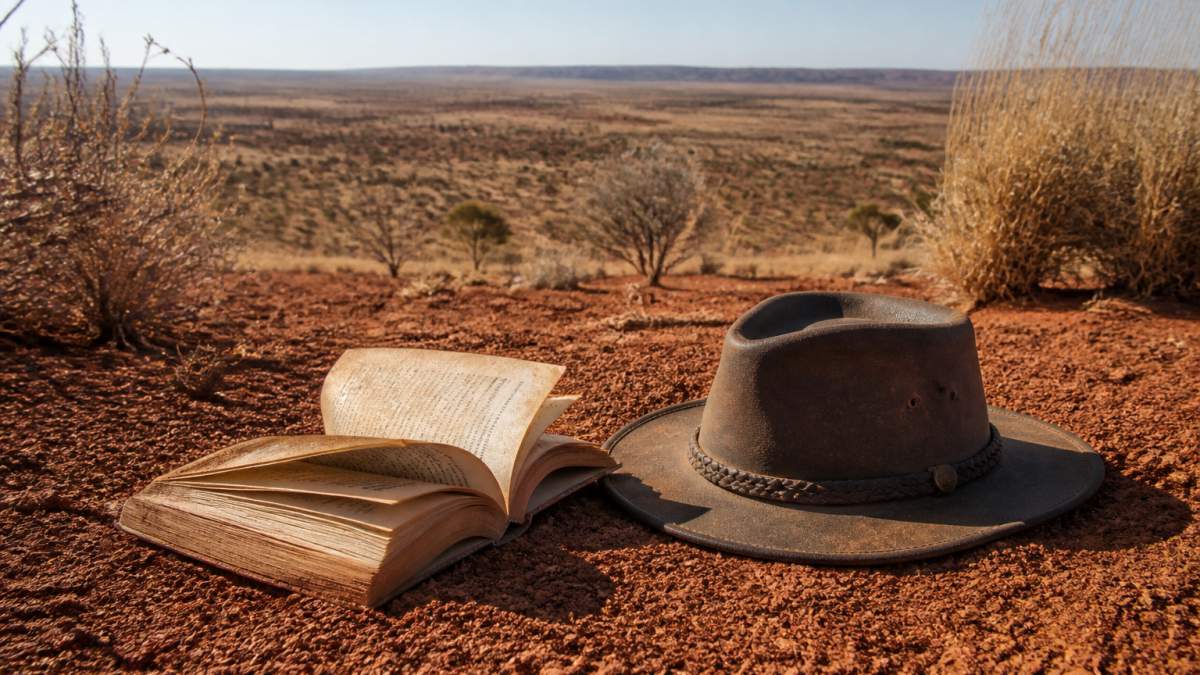
Remote landscapes change how a crime works. In Australian outback crime novels, help is hours away and witnesses are few. A single broken radio can carry more tension than a car chase.
Writers who know the country use this well. The red dust, the heat haze, and the silence become part of the investigation.
A common mistake when choosing outback fiction is assuming every book labelled “Australian” is set in the bush. Check the setting details in the summary. A novel set in a coastal city is not an outback story, however good it is.
Australian Rural Mystery Novels and the Communities They Portray
Australian rural mystery novels live or die on their communities.
That is what keeps readers coming back. The crime is the hook. The town is the reason you finish the book at 1am.
What most guides miss is that rural communities in fiction are rarely passive backdrops. They actively resist or redirect an investigation. A local sergeant might know the suspect’s mother.
When a rural mystery works, you finish it knowing how the town functions. That is the test.
Standalone or Series: A Reader’s Guide to Reading Order
Series order matters more than most readers expect, and it matters most in rural crime, where a detective’s personal history and the town’s secrets accumulate across books. Starting mid-series can spoil earlier reveals and leave you confused about who owes whom.
Use this guide to decide what to pick up first.
| Format | Best For | Watch Out For | Example Pattern |
|---|---|---|---|
| Standalone novel | Trying a new author; one complete story | No returning cast | A single investigation with a closed ending |
| Loose series | Holiday and commute reading | Minor spoilers if read out of order | Shared setting or characters, separate cases |
| Tight series | Book clubs and deep reading | Must start at book one | A detective’s arc builds across every book |
Reading Order in Practice
- Aaron Falk books (Jane Harper): The Dry first, then Force of Nature. The second book references events and relationships from the first, so read in publication order.
- Chris Hammer’s linked novels: Scrublands, then Silver, then Trust. Each has its own case, but characters and consequences carry forward; reading in order avoids spoilers.
- Sarah Bailey’s series: start with The Dark Lake and continue in publication order; the detective’s personal storyline is cumulative.
- Candice Fox’s Hades and Eden: read Hades first; Eden continues the same characters.
Standalone Versus Series: The Trade-Off
A standalone gives you a complete investigation and a definite ending, which suits readers who want to try a new voice without commitment.
A common pattern in outback crime is the loose series: each book has a self-contained case, but the investigator’s backstory and the region’s politics build across titles. These are the easiest to start anywhere, but you will get more from them in order.
If you are unsure, start with a standalone. If you love the author’s voice, move to the series and read in publication order. For the titles above, publication order and series order are the same.
series order and publication dates for these authors
Indigenous Perspectives and Cultural Sensitivity in Outback Fiction
Cultural sensitivity is not a side issue in outback fiction. It shapes whether a book feels authentic or hollow. Stories set on or near Country should treat Indigenous knowledge, communities, and protocols with care rather than as atmosphere.
Readers can look for a few signals:
- Are Indigenous characters written as people, not plot devices?
- Does the book acknowledge whose Country the story takes place on?
- Are cultural details handled with respect and specificity?
A book that gets this right reads richer. A book that gets it wrong feels off, even to readers who cannot name why.
Adding Arnold Van Der Vegt to Your Outback Mystery Shelf
Our own catalogue sits firmly in the suspense and adventure space, shaped by years of travel and observation. The settings are remote. The stakes are high. The plots are built to keep you curious to the last page.
Two entry points, two different audiences:
- Moy Conspiracy is adult crime fiction. It suits readers who want intricate plotting, cunning characters, and a mystery that rewards attention. Book clubs will find plenty to argue about.
- The Jeremy and Melissa Mystery Adventure series is written for young teens and young adults. It is the right choice for a teenage nephew or a family reader who wants adventure without adult content.
If you read on a commute, start with a standalone. If you want a series to follow, start with book one and read in order.
Frequently Asked Questions
What are some good mystery novels set in Queensland?
Look for books that name real regions rather than generic bush. Coastal and city cases sit around Brisbane and the Gold Coast, while rural and outback titles lean on the Channel Country, the Gulf and the far north. Check the publisher’s blurb for a stated setting before you buy, and favour authors who live in or regularly travel through the regions they write about. A Queensland outback mystery works best when the landscape shapes the investigation rather than decorating it.
Which Australian crime novels are set in the outback?
Outback crime novels typically use isolation as the engine of the plot: long distances, small police stations, and communities where everyone knows everyone. When choosing, read the setting description carefully. A genuine outback mystery will reference specific terrain, climate and local industries, not just red dust. Series characters such as rural detectives are common, so check whether the title is a standalone or part of a sequence before starting.
What should I read after finishing a Queensland-set mystery novel?
Move sideways into a different region to keep the atmosphere fresh, then return to Queensland for a series. If you enjoyed a coastal investigation, try an outback crime novel for contrast in pace and setting. If you liked a rural mystery, follow the same detective across later books in the series. Reading order matters most with series, so confirm the first published title before committing to a full set.
Are Arnold Van Der Vegt’s books suitable for teenagers?
It depends which title. The Jeremy and Melissa Mystery Adventure series is written for young teens and young adults, with age-appropriate stakes and pacing. Moy Conspiracy is adult crime fiction and sits in a different category, so it is not the one to hand to a younger reader. If you are buying for a teenager, start with the Jeremy and Melissa series, and read a sample of the adult titles yourself before deciding.
Choosing outback fiction is really a question of how much landscape you want in your mystery. The best Queensland-set books make the setting do the work. If that is what you are after, our catalogue is built for it. Browse Moy Conspiracy for adult crime fiction, or start the Jeremy and Melissa Mystery Adventure series for younger readers, and let the setting carry you in.